The Dachshund and its back: disc disease, warning signs and what really helps
November 20, 2026 · 3 min read · LapaMapa
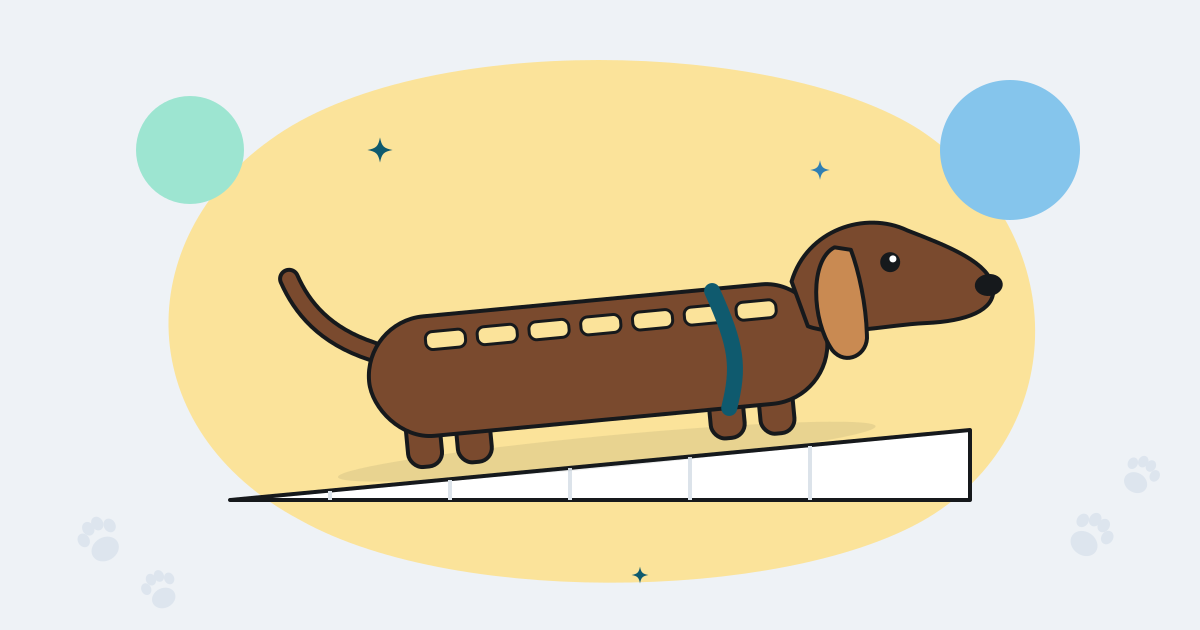
The Dachshund is brave, stubborn and endlessly charming — and its long back and short legs come with one big risk: intervertebral disc disease (IVDD). In this breed the discs between the vertebrae age early, harden and can bulge or burst into the spinal canal, pressing on the spinal cord. The good news: owners can recognise the signs early, and research shows what helps.
This is general guidance, not veterinary advice. Talk to your vet about your own dog.
How common is it
- According to the British Veterinary Association, at least one in five Dachshunds shows signs of IVDD during its life, and the risk is 10–12 times higher than in other breeds. Problems most often start between 5 and 7 years of age.
- The DachsLife survey of 2,031 Dachshunds (2015) found IVDD in 15.7% of the dogs — from 7.1% in standard wire-haired to 24.4% in standard smooth-haired Dachshunds.
- A 2026 study of 4,295 Dachshunds from the UK, Norway and Denmark confirmed that smooth-haired Dachshunds have worse spinal health than long- and wire-haired ones (about twice the odds of problems compared with long-haired dogs in all three countries), and that small smooth-haired dogs fared worst in most comparisons.
Warning signs: go to the vet the same day
Back pain in a Dachshund is an emergency, not "just a bad day". See a vet the same day if your dog:
- stands hunched, trembles, doesn't want to move, climb or jump;
- yelps when picked up or touched on the back or neck;
- walks wobbly, crosses or drags its hind legs, knuckles its paws;
- can't control its bladder or bowels.
If the dog can't walk, go immediately — in severe cases the time to treatment matters. The Urgent page shows clinics open right now. Carry the dog supported under the chest and the hindquarters, keeping the back straight.
What helps — according to the data
Daily exercise. In DachsLife, dogs exercised less than 30 minutes a day had higher odds of IVDD, and dogs exercised more than an hour a day had lower odds. A fit, active Dachshund with strong muscles is better off than one carried everywhere.
Stairs and sofas — the surprise. It is common advice to ban jumping and stairs. DachsLife did not support that: dogs not allowed to jump on and off furniture actually had higher odds. This may be because owners restrict dogs after first problems, so it is not proof that jumping helps — but there is no evidence that a total ban protects the back. Sensible middle ground: ramps or steps to the sofa, no jumping from heights, plenty of normal movement.
Other practical habits:
- Use a harness rather than a collar — a pulling collar loads the neck.
- Lift the dog with both hands: one under the chest, one under the hindquarters.
- Keep it at a healthy weight — good for the joints and the whole body.
Choosing a puppy
In the UK, Dachshunds can be X-rayed at 24–48 months to count calcified discs, which shows the risk the dog may pass on; the result is graded from 0 to 3. Ask the breeder whether the parents had their spine X-rayed, and remember the coat and size data: smooth-haired and miniature lines carry a higher risk.
LapaMapa for Dachshund owners
Find a vet near you before you need one — and save the number of a 24/7 clinic. For daily activity, see the dog runs near you, for example in Warsaw. Keep weight, vaccinations and notes about any back episodes in your dog's free passport, and see the other advice for Dachshund owners as we add it.
Sources: Packer R.M.A. et al. (2016), DachsLife 2015: an investigation of lifestyle associations with the risk of intervertebral disc disease in Dachshunds, Canine Genetics and Epidemiology — DOI 10.1186/s40575-016-0039-8; Dachshund spinal health by coat and size type (2026), Journal of Veterinary Internal Medicine — DOI 10.1093/jvimsj/aalag153; British Veterinary Association — Dachshund health (2020); The Royal Kennel Club — IVDD scheme for Dachshunds.